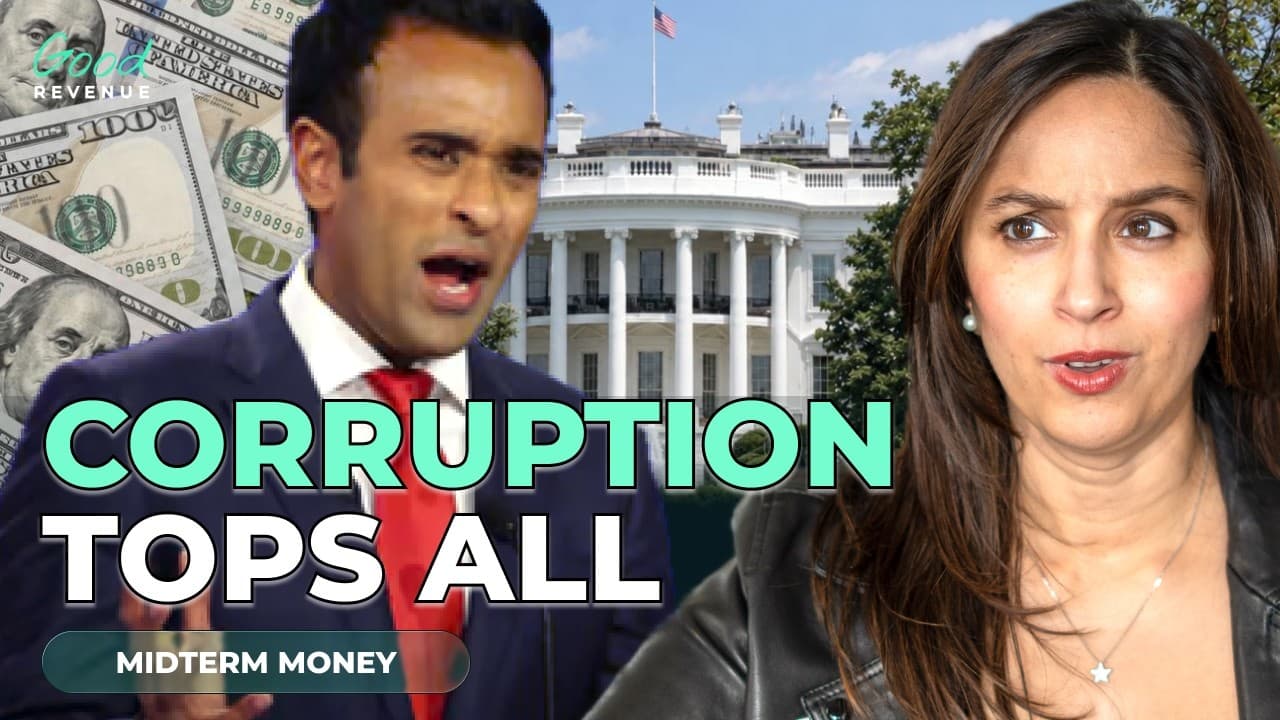
Super PACs Got a Secret Loophole. Voters Beat Them Anyway
A conveniently timed cyberattack froze campaign finance disclosures right before voting day, but a record wave of early ballots may blunt its power.
Timing, as any campaign strategist will tell you, is everything. So when the Federal Election Commission's filing system went dark for 41 hours during the single most consequential week of the midterm cycle, it raised eyebrows well beyond the usual circle of campaign finance nerds. In this episode of Midterm Money, Neeta Bidwai walks through why that outage matters, and why it might matter less than it first appears.
A Loophole Built For Exploitation
Super PACs are legally required to disclose spending within 24 to 48 hours. During the blackout, they simply could not file. That is not a trivial gap. Data from OpenSecrets shows outside groups were spending at least 50 million dollars a day in October, with one single day reportedly seeing as much as 250 million dollars poured into the race. Super PACs have raised more than 12 billion dollars this cycle, and separate estimates put total election spending near 11.6 billion dollars.
The real problem is not just the missed window, it is the cover it provides. Groups can now claim they tried to file during the blackout and the reports simply never went through. Watchdogs call this a devastating blow to transparency precisely because it strikes at the moment voters most need clarity on who is trying to influence them. Compounding the issue, the FEC has lacked a quorum since May 2025, meaning it cannot legally fast-track audits to sort out what actually happened.
Money Meets Its Match: Early Voting
Here is the twist Neeta highlights. More than 51.3 million Americans had already voted before the blackout even became relevant, a historic figure representing roughly 31 percent of the 2024 presidential electorate. That is a lot of minds already made up before any last-minute persuasion campaign, dirty trick, or dark money blitz could land. The last mile of a billion-dollar spending spree may simply be chasing voters who are no longer undecided, or who have already cast their ballots.
That does not mean the spending is wasted everywhere. Close races in battleground states will still be shaped at the margins. But the sheer scale of early voting suggests the money's leverage has diminished compared to cycles past.
Courts, Anger, and the Shrinking Republican Map
Money is not the only stressor in this cycle. A federal judge issued a restraining order through November 16th blocking the Department of Justice and Homeland Security from pressuring state and local election officials, including attempts to segregate ballots, purge voter rolls, or intimidate election workers. Given recent federal activity, an appeal seems likely, and more legal skirmishes are probably coming.
Underneath all of this is a simmering public mood. Gallup data shows voter interest climbing since 1960 alongside historically low approval of Congress, a combination that rarely favors incumbents. The electorate is also increasingly independent, which helps explain the volatility.
The Cook Political Report's latest numbers back that up. Twelve House races have shifted toward Democrats, and the overall map suggests the House is likely to flip blue. The Senate is tighter, with Democrats projected to gain anywhere from two to six seats, a range that determines whether they win narrow influence or outright control. Key races in Texas, Ohio, and Iowa could decide it.
What It Means Going Forward
The FEC blackout is a reminder that transparency infrastructure is fragile, and that convenient timing deserves scrutiny rather than shrugs. But Neeta's larger point lands clearly: in an election where tens of millions of ballots are banked before the money even moves, raw spending power has limits. The real story may not be who spent the most in the final days, but how many voters had already stopped listening.
Sources & Further Reading
FEC Blackout And Dark Money Spending
- How A Cyberattack Shielded Big Donors Before The Midterms
- Why The FEC Filing System Went Dark Days Before Voting
- Explore Federal Campaign Finance Totals And Trends
- Browse Historic Federal Campaign Finance Records
- Who Are The Biggest Individual Donors Of The 2026 Cycle
- See The Top Donors Funding Outside Spending Groups
Election Interference And Legal Battles
Voter Turnout And Public Sentiment
- Record Early Voting Numbers Signal Historic Midterm Turnout
- 2024 Turnout Data Sets The Baseline For This Cycle
- Early Voting Trends Point To A Historic Turnout Cycle
- Why Voter Anger At Corruption Is Defining This Election
- What Issues Voters Actually Care About This Midterm
- Trust In Congressional Incumbents Hits A Record Low
- Why Pollsters Are Struggling To Read This Election
Key House And Senate Races To Watch