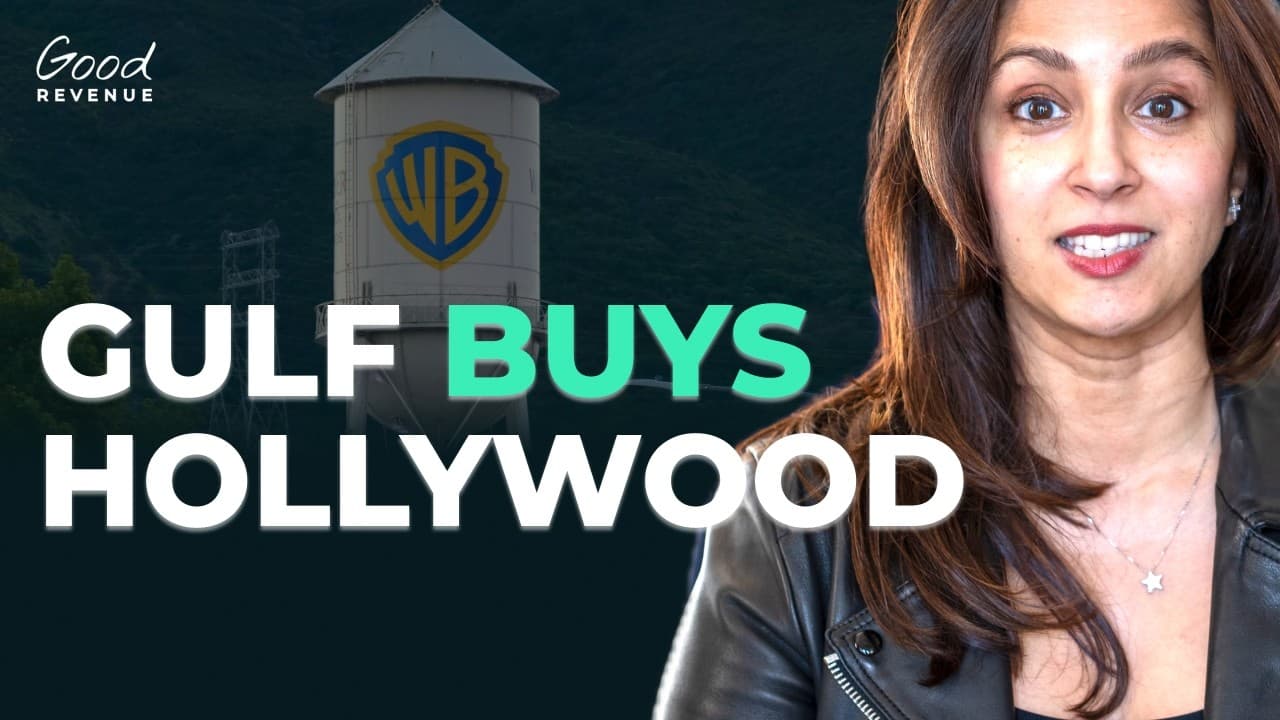
The Paramount Deal Is Really an Oracle Debt Crisis
A $110 billion merger is being fought in court over movie theaters and cable channels, but the more alarming story is the debt tower quietly holding the whole thing up.
The Fight Everyone Is Watching, and the One They Are Not
A judge has put the Paramount acquisition of Warner Bros. Discovery on ice with a 14-day temporary restraining order, and 12 state attorneys general are cheering. The legal argument, led by California AG Rob Bonta, focuses on consolidation in theatrical film distribution, blockbuster releases, and basic cable licensing. On the surface, this looks like a fairly standard antitrust battle about whether reducing major theatrical distributors from five to four harms consumers and theaters.
But that framing misses the more consequential story. The merger is not primarily a competition problem. It is a debt problem, stacked on top of another debt problem, sitting inside an AI spending crisis that nobody in the courtroom is talking about.
What the Antitrust Case Actually Says
The 12 states argue that commitments made by Paramount CEO David Ellison, including a pledge to release 30 films per year in theaters, are not legally enforceable and do not address their concerns about cable market consolidation. They point to the track record of Warner Bros. Discovery CEO David Zaslav, who publicly committed to 16 theatrical releases in 2023 and more than 20 in 2024, then delivered 11 and nine respectively. The lawsuit uses that gap between promise and performance as a credibility argument, and it is a reasonable one.
The Writers Guild of America has also filed suit. The UK and EU are still reviewing the deal but are expected to approve it. The DOJ and FCC have both stepped aside. California and its allies are, effectively, the last line of institutional resistance.
Paramount is fighting back loudly. Its lawyers argue that the real competition is not between studios but between studios and streamers, particularly Netflix, which was itself a bidder before walking away. The argument, roughly, is that blocking this merger is what is actually anti-competitive. The logic is strained, but the urgency is real: Paramount has agreed to a ticking fee of approximately $650 million per quarter if the deal does not close by September 30.
The Debt Tower Nobody Is Tallying in Court
Here is what the antitrust filings do not address. If this deal closes, the combined company will carry $79 billion in debt. Net debt is projected at 6.5 times EBITDA. Fitch has already rated Paramount's existing debt at junk bond status. Analysts are widely skeptical that the $6 billion in promised synergies can be realized within three years. The company is projecting $69 billion in annual revenue and $18 billion in adjusted EBITDA, with a $30 billion content budget at closing. Those are ambitious numbers for an entity that will spend years deleveraging under significant financial pressure.
Now layer in the financing source. This deal is being bankrolled largely through the personal wealth of Larry Ellison, founder of Oracle. Oracle currently carries $120 billion in debt and recently raised an additional $40 billion in financing. S&P has downgraded Oracle's debt to BBB minus, one notch above junk. Oracle shares have underperformed the S&P 500 over the past five years, gaining roughly 40% against the benchmark's 74%. Larry Ellison's net worth peaked at $388 billion last September. By July of this year, it had fallen to approximately $175 billion, a decline driven in large part by Oracle's share price dropping more than 64% from its all-time high, erasing around $600 billion in market capitalization.
The AI Spending Problem Underneath It All
Why is Oracle under so much pressure? The company is spending heavily on AI infrastructure in a race to stay relevant against Microsoft and Alphabet, which have advanced 43% and 175% respectively over the same five-year period that Oracle underperformed. According to PwC's 2026 CEO survey, just 12% of CEOs say AI investment has delivered both cost and revenue benefits. Oracle is betting large on returns that most of its peers have not yet seen.
That context matters for the Paramount deal. The entity financing a $110 billion media merger is simultaneously leveraging up to chase AI ROI that remains, by most measures, theoretical. The combination of Oracle's AI debt, Paramount's junk-rated balance sheet, and a 6.5 times leverage ratio on the merged company is what Neeta describes as a tower of cards that will not withstand a very strong wind.
What California Actually Wants
The unspoken ask from the California AG appears to be divestment of a media asset, with CNN widely named as the likely candidate. That demand makes the deal politically complicated in ways that go beyond standard antitrust negotiation. Bonta seems to be angling for a settlement that includes legally binding job commitments in California and enforceable theatrical release schedules.
The clock, in the meantime, is entirely Paramount's enemy. Every week of litigation is a week closer to that $650 million quarterly ticking fee. Whether or not the antitrust case holds up, the financial structure of this deal was always going to be the harder test. The courtroom drama is real, but the balance sheet is where this story is most likely to end.
Sources & Further Reading
Court Filings and Legal Actions
The Merger Lawsuit
The Merger's Debt Crisis and Financial Risk
Oracle's Debt Crisis and AI Spending
- Yahoo Finance: Oracle Stock Crash Is Embarrassing for Larry Ellison
- Oracle Stock Shrugs Off S&P Downgrade But $160B Debt Looms
- Ars Technica: Oracle's 21,000 Layoffs Fund Its Debt-Fueled AI Bet
- Motley Fool: Oracle's $120B Debt Problem Is Just the Beginning
- S&P Global: Oracle Credit Rating Downgrade to BBB-
AI Investment ROI and CEO Confidence