AI's Biggest Threat Is a Subsidy Nobody Authorized
China's distillation attacks may be quietly converting hundreds of billions in American AI investment into a gift for its own labs. The US response so far has changed very little.
The Heist Hidden in Plain Sight
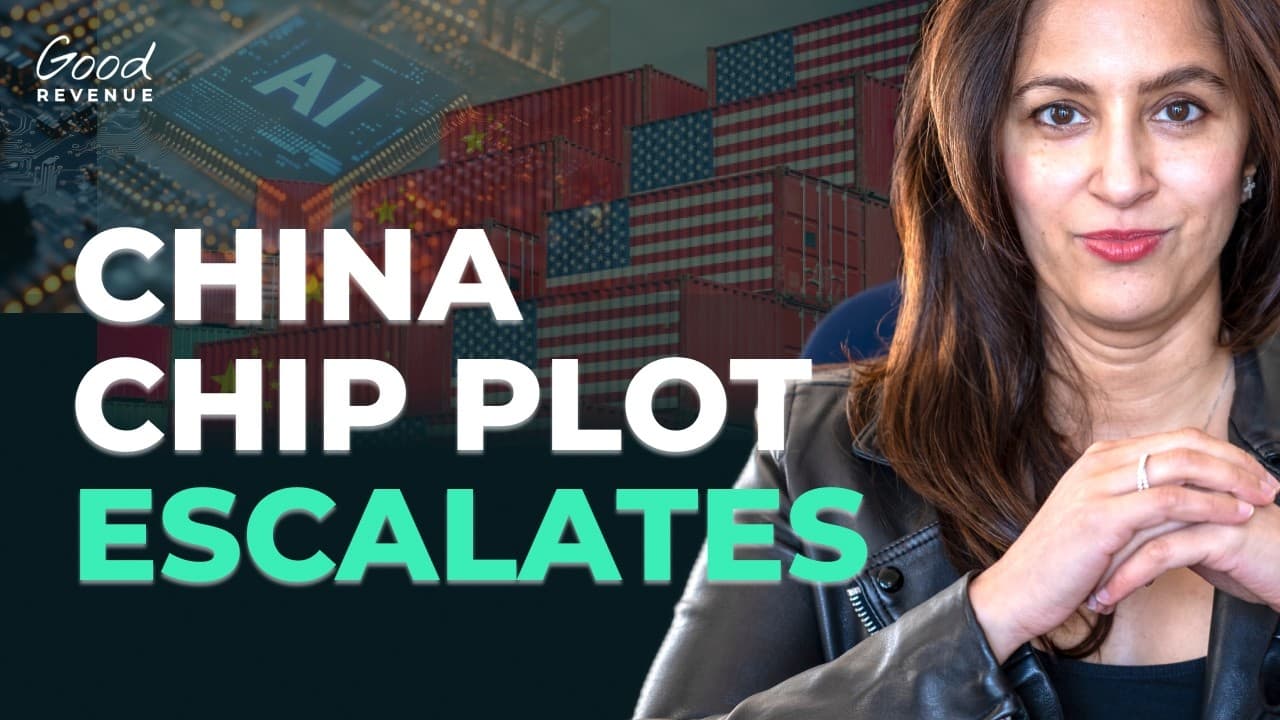
The most alarming number in this week's AI news is not a valuation or a stock price. It is 28.8 million. That is the number of exchanges that Anthropic says were harvested from its Claude model between late April and early June by a campaign linked to Alibaba, using 25,000 fake accounts. Anthropic has called it the largest distillation attack ever recorded, and the company has taken its case directly to Congress.
The core argument is simple and, if accurate, deeply uncomfortable: distillation attacks convert hundreds of billions of dollars in American private investment into a de facto research subsidy for Chinese AI labs. No appropriations committee voted for that. No trade deal authorized it. It is happening anyway, and deterrence, even after a formal White House memo on the subject, has not stopped it.
What Distillation Actually Does
Distillation is not hacking in the conventional sense. Attackers do not break into servers. Instead, they query a frontier model at massive scale, collect the outputs, and use those outputs to train a competing model. The frontier model essentially teaches its own replacement. For a lab like Anthropic, which has spent years and extraordinary sums building Mythos to the point where the US government has classified its release, watching that capability get systematically extracted through fake user accounts is an existential problem.
Anthropic's letter to Congress lays out three requests: an antitrust exemption allowing US labs to share intelligence about attack tactics, tighter export controls on advanced AI chips and compute, and stronger enforcement against smuggling networks that are already moving restricted hardware into China through third-country data centers. The chip request is pointed. Nvidia, whose advanced GPUs power the global AI buildout, has watched China go from nearly 20 percent of its revenue to a restricted market. The company has not been enthusiastic about that trend, and new controls would sharpen that tension considerably.
OpenAI's Valuation Problem Is a Business Model Problem
While Anthropic is fighting regulatory and security battles, OpenAI is fighting arithmetic. According to leaked audited financials, the company lost $38.5 billion in 2025, with $34 billion of that going to R&D and compute. Sam Altman wants a $1 trillion valuation for an IPO that advisors are now telling him cannot happen in 2026 at that price. Their last private round valued the company somewhere between $730 billion and $852 billion, which is already a number that requires a great deal of narrative optimism to sustain.
The underlying issue is structural. AI labs have been subsidizing their customers, offering subscriptions priced well below the actual cost of tokens. As both Anthropic and OpenAI move toward accurate token pricing in preparation for public markets, enterprise customers are responding rationally: they are routing simpler tasks to cheaper, lighter models and rationing their use of the expensive frontier systems. That is exactly the kind of demand elasticity that makes a growth story hard to tell to public market investors.
OpenAI's CFO, Sarah Friar, reportedly flagged these concerns internally almost a year ago, warning that the company was not ready to go public without significant work on the business model. The intervening months have not resolved those concerns.
Wild Cards That Could Shift the Calculus
Three variables are scrambling the picture further. First, SpaceX's IPO. The company raised $86 billion in the largest IPO on record and then closed a $25 billion corporate bond round within weeks, a combination that has serious observers at firms like Allianz openly using the word bubble. If SpaceX's share price continues its post-peak decline, the appetite for high-valuation, pre-profit tech listings could cool quickly.
Second, index mechanics. FTSE Russell just moved to semi-annual rebalancing for the first time since 1989, a structural change that accelerates the inclusion of high-valuation companies like SpaceX into the Russell 1000. That same logic would apply to OpenAI or Anthropic upon listing, funneling passive index capital into these stocks regardless of fundamentals. It is a meaningful tailwind, but it does not fix the underlying business model.
Third, and perhaps most telling, Altman appears to be watching Anthropic closely. Across most available metrics, Anthropic is currently the stronger company. If Anthropic hits serious friction, whether from government restrictions on Mythos, ongoing distillation attacks, or its own path to public markets, it changes what OpenAI can realistically claim in a roadshow.
What Comes Next
The AI arms race is accelerating on every front simultaneously: geopolitical, financial, and regulatory. Anthropic is asking Congress for tools to defend American AI investment at the same moment it is trying to demonstrate it can run a public company. OpenAI is trying to paper over a $38.5 billion loss year with a valuation argument that requires either enormous future growth or a very forgiving market. Neither problem has a clean solution in sight, and both are getting more complicated by the week.
Sources & Further Reading
Alibaba's Distillation Attack on Anthropic
AI Distillation Attacks and Adversarial AI Use
Mythos, Anthropic's Restricted AI Model