SpaceX's $2 Trillion Valuation Has No Basis in Its Numbers
SpaceX's blockbuster IPO made Elon Musk the world's first trillionaire. But index fund rule changes mean ordinary investors may be holding the bag.
A Great Day for SpaceX, a Complicated One for Everyone Else
SpaceX went public on June 12, 2026, priced at $135 a share, opened at $150, and finished the day up more than 25%. By any surface measure, it was a triumph. Elon Musk became the world's first trillionaire. Banks pocketed around $500 million in fees. Early investors are sitting on extraordinary gains.
But as this episode of Good Revenue makes clear, a spectacular first day and a sound investment are two very different things. And the mechanics quietly engineered to make this IPO work may end up costing ordinary investors far more than the ticker suggests.
The Valuation Problem Nobody Wanted to Talk About
The most striking visual from the day was a chart showing SpaceX's market cap alongside its revenue and net income. The numbers do not connect. There is no logic, grounded in fundamentals or even generous growth projections, that explains a $2 trillion valuation for a company with SpaceX's current financial profile.
Neeta's argument is direct: this is a faith-based investment. The market is pricing in Starship succeeding at scale, xAI becoming a dominant force, a Tesla merger unlocking synergies, and $69 billion in AI data center revenue materializing on schedule. That is a lot of dominoes that all have to fall in the right direction.
Meanwhile, the S1 filing disclosed a company riddled with related-party transactions. Spending $131 million on Cybertrucks as a corporate purchase, deep financial exposure to xAI which has been a net drag on SpaceX's health, and a merger announcement dropped casually by the COO on IPO day in a manner that might have attracted SEC attention in a different regulatory environment. The conflicts of interest are not minor footnotes. They are structural features of the business.
How Index Funds Became the Backstop
Here is where the story gets genuinely consequential for people who have never thought twice about SpaceX.
The Nasdaq 100 and FTSE Russell both changed their own rules to include SpaceX in their indices within 15 days of the IPO. The S&P 500 declined to follow suit, a decision that will reportedly cost SpaceX as much as $14 billion in passive inflows. That one holdout tells you something important: the historic quality standards these indices were built on were inconvenient, so two of the three simply moved them.
The timing of the IPO date was not accidental. Individual investor lockups expire in 15 days, precisely when index funds arrive as buyers. Private market investor lockups run through December 9th, landing just ahead of the next major index rebalancing in mid to late December. The calendar was engineered so that at every stage where selling pressure might otherwise push the price down, a wave of forced index buying shows up to absorb it.
If you hold an index fund that tracks the Nasdaq 100, you will own SpaceX whether you want to or not, and you will have bought it at a price set by this process rather than by any independent assessment of value.
What History Says About IPO Investing
Jay Ritter at the University of Florida has studied IPO data from 1980 through 2024. His finding is sobering: buying an IPO at the close of its first day and holding for three years produces returns roughly 21% below the value-weighted market index. The average IPO's first-day pop, about 19% historically, rewards the people who got in before the public. Everyone who buys into the excitement is statistically likely to underperform a plain index fund over time.
The irony is that the index funds being restructured to accommodate SpaceX are themselves the better long-run bet, at least in a version of the world where they are not being loaded up with overvalued companies to service the exit needs of private market investors.
The Headwinds Ahead
SpaceX's future depends heavily on Starship, which has had a difficult recent run. Blue Origin suffered a severe launchpad setback that may sideline it for years, which removes a competitive check on SpaceX in commercial space but does not solve SpaceX's own technical challenges.
The xAI exposure adds a different category of risk. AI pricing is shifting from subsidized subscriptions to token-based billing, and enterprise customers are starting to push back hard when CFOs see the real costs. Uber's leadership has been among those publicly questioning whether the ROI is actually there. That repricing pressure hits SpaceX indirectly but meaningfully, given how central xAI revenue projections are to the overall valuation story.
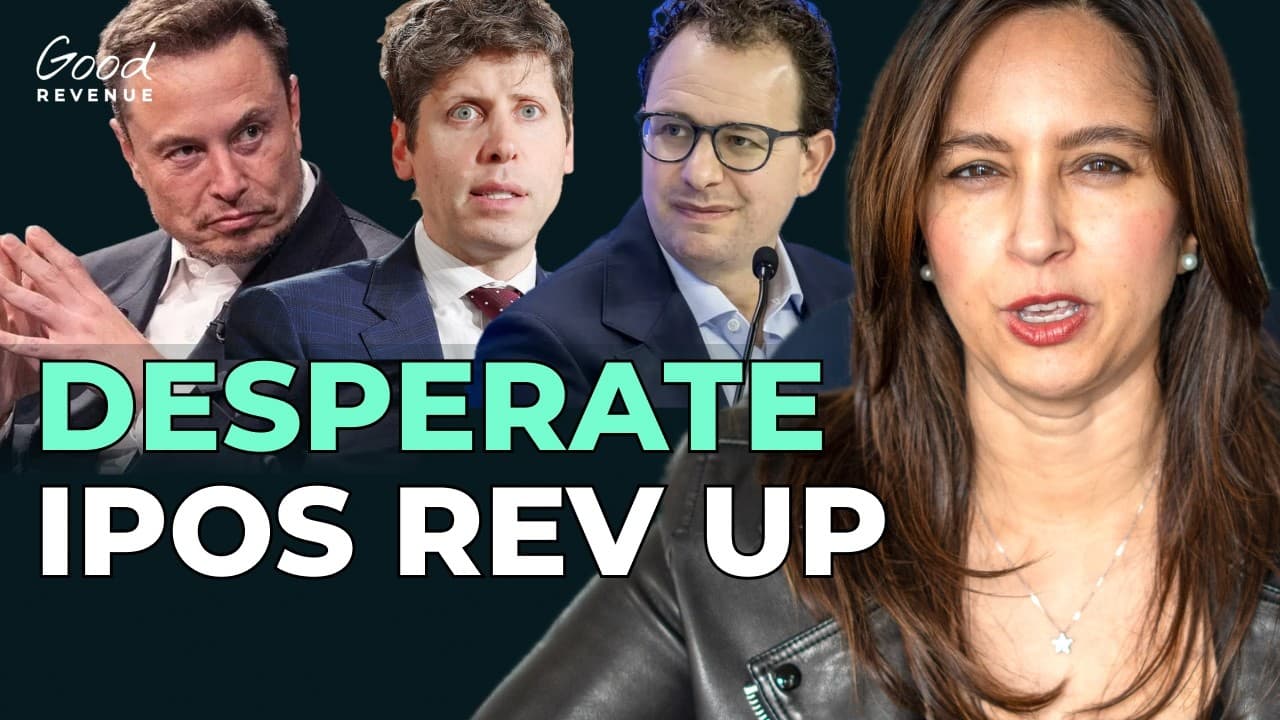
Anthropic and OpenAI are both watching the SpaceX debut closely as they prepare their own IPOs. A good day for SpaceX is useful marketing for them. But whether the market can absorb two more multi-hundred-billion-dollar AI-adjacent offerings at the same moment that the AI price war is finally becoming real is a question nobody on the winning side of today's trade is rushing to answer.