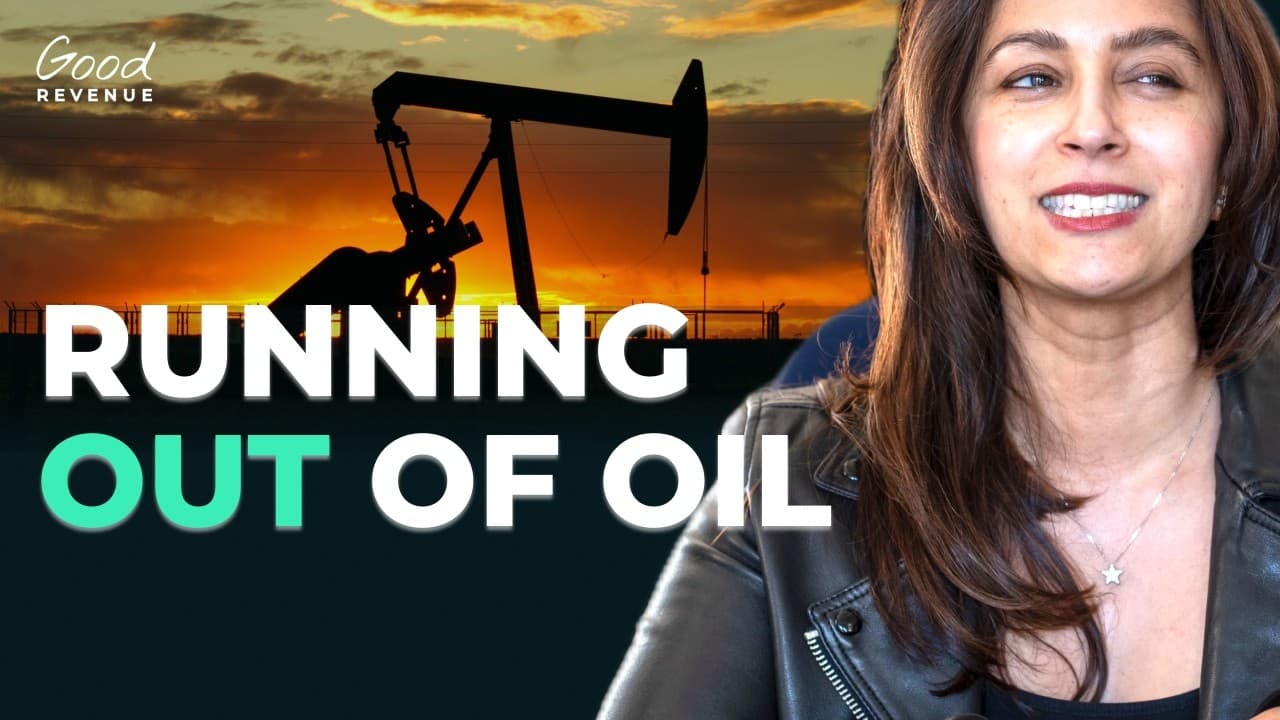
The Iran Peace Deal That May Not Lower Your Gas Bill
A US-Iran framework agreement is sending oil markets soaring with relief, but the supply chain realities of mines, shadow fleets, and depleted reserves tell a far more complicated story.
The Deal That Markets Love and Analysts Fear
Oil traders celebrated this week. Brent crude dropped below $80 a barrel on news that the United States and Iran are set to sign a memorandum of understanding on June 19th, with the Strait of Hormuz slated to reopen. After prices spiked above $110 a barrel following the outbreak of the Iran war on February 28th, the relief is understandable.
But as this episode of Good Revenue makes clear, the market's optimism may be running well ahead of the facts on the ground.
The MOU is a framework, not a treaty. Its full text has not been released. And the gap between what each side is claiming is already wide enough to fit a tanker through, assuming the tanker can get past the mines.
What Is Actually in the Deal
According to the Iranian side, the US has agreed to release approximately $25 billion in previously sanctioned Iranian revenues. The US has not confirmed that figure. More striking, reporting suggests the total US financial commitment could reach $300 billion, a number that dwarfs the roughly $1.5 billion unlocked under the original JCPOA negotiated by the Obama administration over a decade ago.
The existing Iranian government, led by the IRGC, remains in place. The Ayatollah, who has been largely absent from public view since the war began, retains authority. And the nuclear question, which the US president describes as a hard red line, looks far murkier when set against data from the Council on Foreign Relations showing how aggressively Iran ramped up uranium enrichment after the JCPOA was abandoned.
The deal also faces serious stakeholder problems. Israel is not a party to the MOU, and its ongoing strikes on Hezbollah positions in southern Lebanon are a direct provocation to Iran, which funds Hezbollah as a core proxy. The Gulf States, particularly the UAE, absorbed the heaviest missile and drone attacks during the conflict and have not publicly signed on to the framework either. These are not minor footnotes.
Why Your Gas Bill Is Not Coming Down Yet
Even setting aside the diplomatic fragility, the energy picture remains grim for consumers.
The Strait of Hormuz cannot simply be switched back on. Iran has spent three months mining the strait, and those mines have to be cleared before normal shipping lanes can be restored. In the interim, vessels will be forced to hug the Iranian coastline, precisely where the IRGC is positioned to collect what Iran is calling an environmental fee, but what amounts to a toll on what was previously open international waters.
Shipping companies are not going to send vessels through until they are confident the peace holds, and analysts expect that process to take weeks. From there, oil moving west still has to transit the Red Sea, while eastbound cargoes face long Pacific crossings. The journey from Persian Gulf wellhead to a gas pump in France or Ohio takes time under normal conditions. These are not normal conditions.
Neeta's argument in this episode is direct: historically, oil prices rise fast and fall slow. The settlement of current pricing is probably six months to a year out. Oil executives made the same point in person to the White House just last week. The US Strategic Petroleum Reserve is now at its lowest level since the 1980s, compounding the problem. Meanwhile, the US actually increased crude oil exports during the crisis rather than drawing down reserves, adding roughly one million barrels per day above its typical export rate in April and May.
The Munitions Problem Nobody Is Talking About
Perhaps the most underreported consequence of this conflict sits not in the oil market but in Pentagon warehouses, or rather in the absence of what used to be there.
According to analysis from CSIS, the Center for Strategic and International Studies, the war has burned through US missile inventories at a rate that will take years to address. THAAD and Patriot systems will require three or more years to return to pre-war levels. Standard missiles face a roughly two-year timeline. Even newer precision strike systems, already at low inventory before the war, will take months to a year to replenish.
The supply chain problem is partly structural and partly political. Defense contractors have historically distributed production across as many congressional districts as possible to ensure funding, a strategy Don Draper might recognize as savvy lobbying but which produces exactly the kind of slow, fragmented output that a wartime surge demands.
The response has produced one genuinely interesting development. General Motors is in direct talks with the Pentagon about building munitions and potentially other military hardware. GM is also reportedly in discussions with Lockheed Martin. Volkswagen and Mercedes are eyeing components for Israel's Iron Dome. The auto industry, squeezed by slowing consumer demand, is looking at defense as a meaningful new revenue line.
Ford is a notable absence from that list, likely because of its deep entanglements in China, which would raise national security complications on multiple sides.
What to Watch
The MOU signing on June 19th will clarify some details and muddy others. The energy market will keep watching mine-clearance progress and shipping lane status. The bigger structural questions, about Iranian nuclear capacity, Gulf State buy-in, Israeli restraint, and US munitions recovery, will take much longer to resolve.
The framework may be real. The peace dividend is not, at least not yet.
Sources & Further Reading
Iran Deal Terms and Nuclear Outlook
Strait of Hormuz and Energy Supply
- Strait of Hormuz Live Ship Transit and Oil Price Tracker
- EIA Short-Term Energy Outlook: Global Oil Supply and Price Projections
- EIA Weekly Petroleum Status Report: US Crude Supply and Inventory Data
- US Strategic Petroleum Reserve Current Inventory Levels
- Trump Claims 100 Million Barrels of Oil Moved Through Hormuz on 200 Ships
- Oil Executives Warn the White House That Gas Prices Are Going to Get Worse
- China Is Cutting Oil Imports and Accidentally Helping the Global Economy
- The Dangerous Technology Found Aboard Dark Fleet Tankers Seized by the US
- FT: Global Oil Market Data and the Iran War's Impact on Brent Crude
- Trump Iran Deal Allows Tehran to Immediately Resume Oil Sales
Munitions Depletion and Defense Industrial Base
- How Long It Will Take the US to Rebuild Missile Inventories After the Iran War
- US Will Need Years to Replenish Advanced Weapons Stockpiles Used in the Iran War
- Ukrainian Drone Instructors Reveal Gaps in US Military Training
- Trump Leverages the Defense Production Act to Boost Munitions Collaboration
- GM in Talks to Supply Weapons Parts to Lockheed Martin