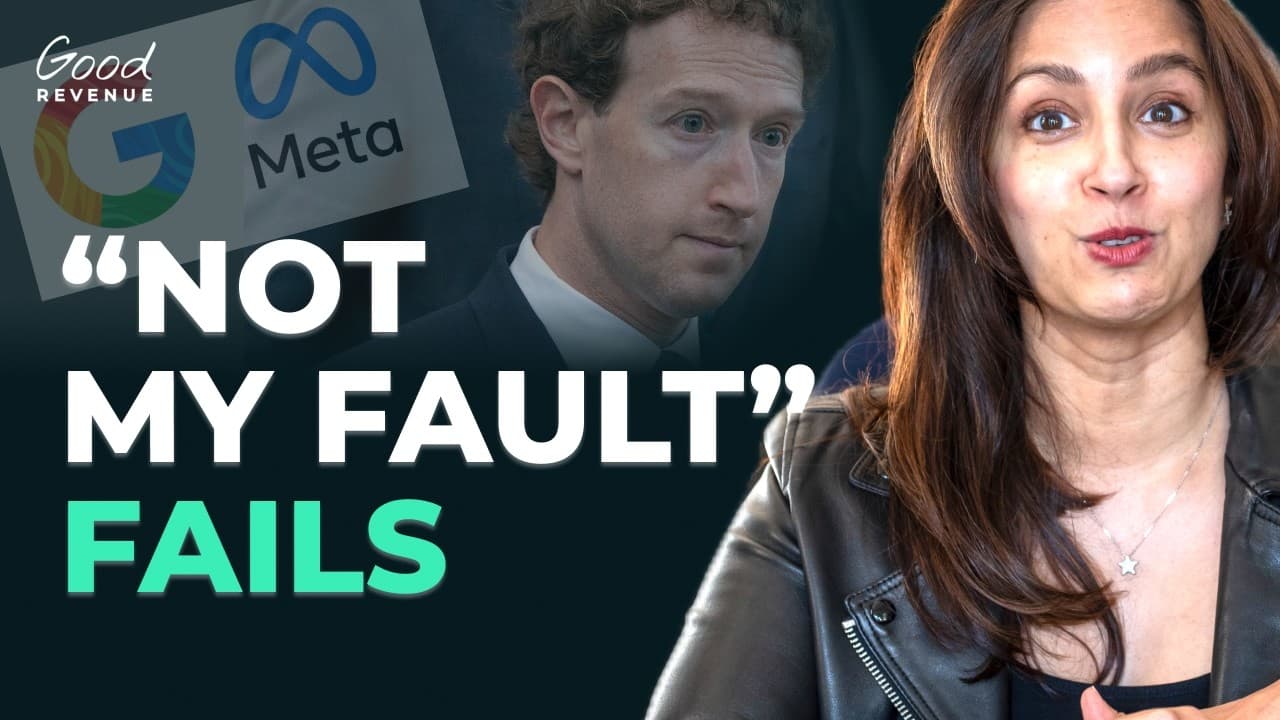
The Meta Fine Is Not About the Money
A $942 million penalty sounds like a headline number, but the real threat to Meta is a five-year leash on its product decisions and a legal blueprint 29 states are ready to copy.
The Headline Number Is a Distraction
Every outlet covered the $942 million fine. Almost none of them explained why Meta's lawyers are losing sleep over something far more consequential than the dollar figure.
Break the number down and the real story emerges. The $375 million portion was a March jury verdict, a punishment for aggregated harms to 75,000 people in New Mexico. Significant, but comprehensible. The $567 million announced just recently by a judge is something structurally different: an abatement fund, modeled on the legal mechanisms that eventually reined in tobacco companies and opioid manufacturers. It does not just penalize past behavior. It funds a five-year plan and, critically, places New Mexico inside Meta's product decisions for the duration.
That is the thing Meta and Mark Zuckerberg are actually worried about.
How New Mexico Got Around Section 230
Section 230 of the Communications Act has functioned as a near-impenetrable shield for social media platforms for more than a decade. It limits liability for third-party content, and tech companies have leaned on it aggressively to fend off state-level regulation.
New Mexico's legal team found a side door. Rather than attacking Meta for what users posted, they targeted the product design itself and the business practices behind it, framing the case under consumer protection and public nuisance law. A jury found that argument compelling enough to award $375 million. A judge then layered on the abatement structure.
The mandated changes that follow from the ruling read like a consumer-safety checklist that many people assumed would have been adopted voluntarily years ago: age verification, time limits for users under 18, hidden like counts, no overnight push notifications, private-by-default Instagram accounts for minors, restricted friend-access defaults, and rules preventing Meta from recommending minors' accounts to adults. These are not exotic demands. The fact that they required a court order says something about how the platforms have been run.
The Fine Is Not the Risk. The Template Is.
Meta's free cash flow fell to $784 million in Q2, down from $8.55 billion a year earlier, largely because the company is spending enormously on AI infrastructure. A $14 billion data center deal with BlackRock in Texas, a $50 billion facility in Louisiana, a $9 billion build in Canada. Against that backdrop, a sub-billion-dollar fine is, arithmetically, not a crisis.
What is a crisis is the possibility that 29 other states replicate what New Mexico just did. A coalition of states is heading to trial in Oakland, and four of them, California, Colorado, Kentucky, and New Jersey, have collectively estimated worst-case penalties at $1.4 trillion. Nobody expects that figure to be realized. But it illustrates the order of magnitude that is now theoretically in play.
Meta's own CFO flagged it in the Q2 earnings disclosure, warning investors that the costs of social media litigation are going to be significant. Legal expenses hit $2.4 billion in the quarter, several times the run rate of prior periods. The company is no longer treating these cases as one-off events.
Wider Implications for Big Tech
This is not a Meta-only story. YouTube, Snap, and TikTok all face structurally similar allegations around harm to minors. Some have already settled cases this year. Now that New Mexico has demonstrated a path around Section 230 that juries find persuasive, the risk profile for the entire sector shifts.
There is also the international dimension. Meta is simultaneously contesting an EU antitrust case estimated at $200 to $500 million and an active proceeding in Australia over deceptive crypto advertising. The litigation map is expanding, not contracting.
What Comes Next
The Oakland trial beginning August 12 will be the next major signal. If the New Mexico framework holds up under the pressure of a larger multi-state action, it becomes a standard playbook. States that were not party to the current coalition may look at their own laws and decide they have more leverage than they previously thought.
For Meta, the uncomfortable reality is that the era of treating regulatory fines as a cost of doing business, absorbed quietly and passed along to shareholders, may be ending. Being handed a five-year behavioral mandate by a state court is a different kind of accountability. And if Oakland goes badly, it will not be the last.
Sources & Further Reading
New Mexico Ruling and Court Documents
Multistate Coalition and Oakland Trial
Meta Financial Disclosures and Legal Risk
Section 230 and Platform Liability Law