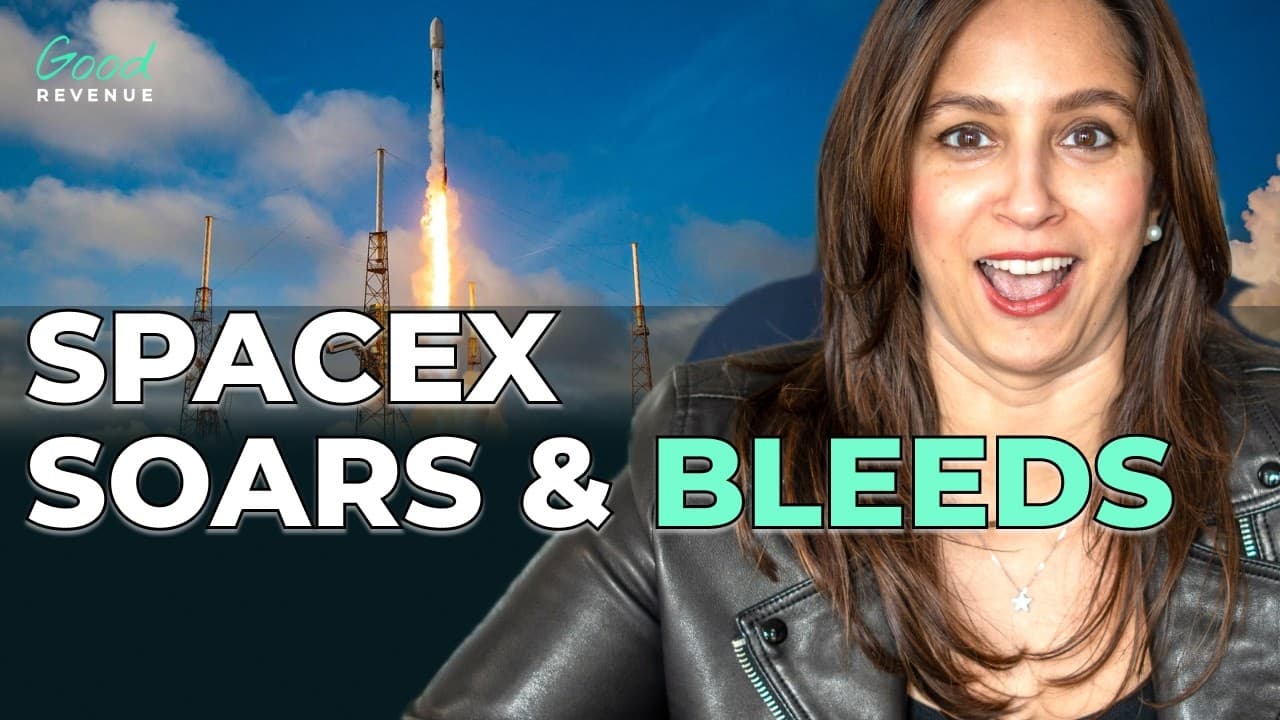
SpaceX Fell Below Its IPO Price and Banks Still Love It
SpaceX shares have dropped 40% from their peak, bonds are drifting toward junk status, and yet major banks keep issuing bullish price targets. Something does not add up.
The Stock the Banks Will Not Quit
SpaceX shares closed below their $135 IPO price for the first time this week, pushing the company's valuation to approximately $1.79 trillion, a 40% retreat from its peak. The timing is awkward: the company's 13th Starship launch is scheduled for tomorrow, bond spreads are creeping into junk territory, and S&P projects negative free cash flow through 2029. And yet Morgan Stanley has a $300 price target on the stock, and UBS is telling clients to buy ahead of the launch.
That gap between what the bond market is saying and what the equity analysts are saying is the real story here, and it raises an uncomfortable question: who exactly is this optimism for?
When Index Rules Become a Backdoor
Part of what made SpaceX's post-IPO surge so dramatic was not just retail enthusiasm or institutional conviction. It was a rule change. SpaceX was granted accelerated entry into the Nasdaq 100 after just 15 days, bypassing the seasoning period that typically lets a new public company's price discover itself before it lands in passive funds. The S&P 500 said no. The Nasdaq 100 and FTSE Russell said yes.
The practical effect is that millions of ordinary investors who simply hold index funds are now SpaceX shareholders, whether they intended to be or not. Neeta flags this as a structural concern: the rules that were bent for SpaceX look likely to be bent again for Anthropic and potentially OpenAI. The precedent matters more than the individual case.
Morningstar, for its part, put fair value at around $780 billion before the IPO, estimating the company was already at a 48% premium to its private market valuation at the time it listed. That gap has only widened.
Starlink Is a Good Business Inside a Complicated Company
It would be unfair to dismiss SpaceX as purely a sentiment trade. Starlink is a genuinely impressive operation: 10,000 satellites, 10 million customers, and $11.39 billion in revenue in 2025. It is also moving aggressively into the telecom sector, and analysts marked down AT&T, Verizon, and several other legacy carriers this week in response. If you are hunting for incumbents who deserve disruption, the major telcos are a reasonable target.
But $11.39 billion in revenue cannot easily justify a valuation that recently touched $2.6 trillion, especially when the parent company posted a $4.9 billion net loss in the same year. Moody's is flagging concentrated voting power as a governance risk. Bond spreads at 1.62 exceed the typical double-B average of 1.55, which means the fixed income market is already pricing in sub-investment-grade risk even while the equity market prices in a space empire.
The Competition That Was Not In the Prospectus
Two developments this week complicate the Starlink growth story further. Amazon announced it expects a viable LEO satellite network operational by year end, following a launch of 29 satellites. It is well behind Starlink today, but Amazon has a track record of absorbing early losses to win markets, and it is not a company that tolerates a competitor holding a monopoly position indefinitely.
The second development comes from China, which announced a successful launch of its first reusable rocket as part of the Long March 10B program. China has been explicit about its ambitions to challenge American aerospace dominance. Its domestic economy is under real pressure, growing at its slowest rate since the COVID era of 2022, which may constrain near-term spending. But it would be a mistake to read a temporary fiscal squeeze as a strategic retreat.
What the 40-Year IPO Data Actually Says
Beyond the company-specific issues, there is a broader pattern worth keeping in mind. Research from Jay Ritter, the University of Florida professor who is widely regarded as the leading academic expert on IPOs, studied the asset class over four decades. His finding: buying an IPO at the close of its first trading day and holding for three years produces returns roughly 21% below a value-weighted market index.
IPOs take time to find their level. The excitement of a launch, the novelty premium, the founder narrative -- all of it tends to get repriced as real operating results accumulate. SpaceX has a legitimate and valuable core business. But the Starship launch tomorrow, however successful, does not resolve the question of whether the stock is priced for the business that exists or the one that Elon Musk has promised will exist someday.
That distinction is going to matter a great deal to anyone who did not choose to own this stock but finds it sitting in their index fund anyway.
Sources & Further Reading
SpaceX Valuation, IPO Performance and Bond Market Warnings
Satellite Internet Competition: Amazon Leo vs. Starlink
China's Space Program and Economic Pressures