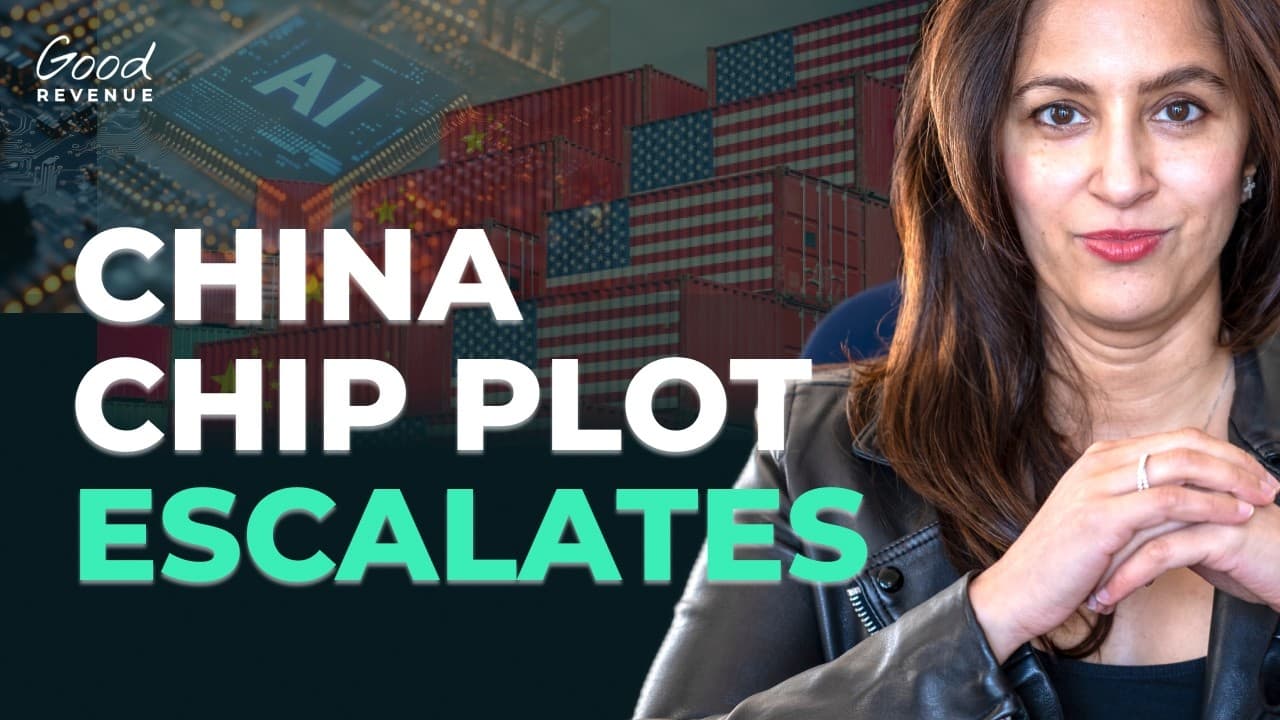
Why the US-China Summit Will Likely Yield Nothing
A high-profile presidential visit to Beijing arrives with four unresolved crises underneath it. The gap between the photo op and any real deal has rarely looked wider.
The Summit Nobody Should Expect Too Much From
A US presidential visit to Beijing sounds like the kind of event that moves markets, resets relationships, and generates breathless headlines about a new era in great-power diplomacy. This time, the fundamentals argue for skepticism. Four interlocking problems sit beneath the surface of any handshake, and none of them are close to resolution.
Neeta Bidwai breaks down each one in this week's episode, and the picture that emerges is less a bilateral negotiation and more a cold war running on four separate tracks simultaneously.
The AI Chip Problem Is Bigger Than Export Controls
The most technically urgent issue is also the one generating the most creative workarounds. US export controls bar China from purchasing NVIDIA's most powerful chips, including the Blackwell generation and the forthcoming Vera Rubin line. The policy was designed to slow Chinese AI development. The evidence suggests it has done so only partially.
A co-founder of Supermicro was federally indicted alongside two others for allegedly smuggling banned chips to China through third-party intermediaries. New reporting points to Thailand as a routing point in addition to Singapore, which had already been identified as a hub where Chinese companies move model training operations to access chips that are technically off-limits at home.
Meanwhile, Chinese researchers have been systematically distilling models built by Anthropic and OpenAI. Both companies have publicly flagged the practice. The result is that China remains only about seven months behind the US AI frontier despite being formally locked out of the hardware that powers it. That is not the margin a chip embargo is supposed to produce.
Iran, China, and a Sanctions Web Centered in Hong Kong
The second blocking issue is Iran. The Financial Times has reported that Iran purchased a satellite from China, which it has since used to target US assets and allied positions in the Gulf. The satellite relies on substations inside China, leading security analysts to conclude the arrangement has government backing.
China has also served as the operational hub for a global sanctions evasion network built around the so-called shadow fleet: tankers that move oil for Iran, Russia, Venezuela, and others in defiance of international sanctions. The coordination center for much of this activity is Hong Kong. This is not a topic either government is likely to address publicly during a summit visit, but it is the kind of issue that makes any warm communique feel hollow.
Taiwan's Clock Is Running
China has stated it aims to reunify with Taiwan by 2027. It is now mid-2026. That timeline concentrates the mind in ways that years of abstract diplomatic tension did not.
Taiwan is a functioning democracy with deep commercial ties to the United States, including through TSMC, whose semiconductor manufacturing capacity is strategically irreplaceable. The US position involves long-standing defensive commitments. China wants the US to disclaim any intention to intervene militarily. Neither side is anywhere near an accommodation, and neither side can say so out loud without triggering a crisis.
The Trade Fight That Actually Has Legal Legs
The fourth issue is the oldest and most structurally complex: trade. China runs a massive global surplus built on practices that include dumping goods below market price, currency manipulation, and routing exports through third countries to obscure their origin. Vietnam has become the top US trading partner in significant part because it functions as a transit point for Chinese goods entering the American market.
What is genuinely new is the rigor being applied to Section 301 trade investigations. An analyst tracking the USTR process in near real time has surfaced findings that matter. More than 40% of submissions identify Chinese overcapacity as the central problem. Commenters broadly distinguish between countries with genuine comparative advantage, a nation that mines a resource the US needs, for example, and an economy that mass-produces electric vehicles through subsidies and then floods foreign markets to eliminate competition. The record draws that line clearly, and it points at China.
This matters legally. Tariffs imposed through broad executive assertions of authority have already been struck down twice, once by the Supreme Court and once by the International Trade Court. Rulings grounded in rigorous investigative records are far more likely to survive legal challenge and to produce durable policy.
What Comes Next
The summit will produce statements. It may produce gestures. What it is very unlikely to produce is substantive movement on any of the four issues described here, because each one touches something the other side cannot concede without a domestic political cost it is unwilling to pay.
The episode commits to circling back after the visit. That follow-up will be worth watching, not because the news is expected to be good, but because the gap between the rhetoric and the reality of US-China relations has rarely been this wide, or this consequential.
Sources & Further Reading
US China Relations and Summit Watch
- US Senators Push for Stability and Cooperation with China Amid Rising Tensions
- Trump Xi Beijing Summit What to Watch in the Most Important Global Relationship
- Five Critical Things to Watch as Trump Heads to Beijing for High Stakes Talks
- Trade Uncertainty Looms Ahead of Trump Xi Summit What It Means for Global Markets
Iran War, Geopolitics & Artificial Intelligence
Sanctions Export Controls and Evasion